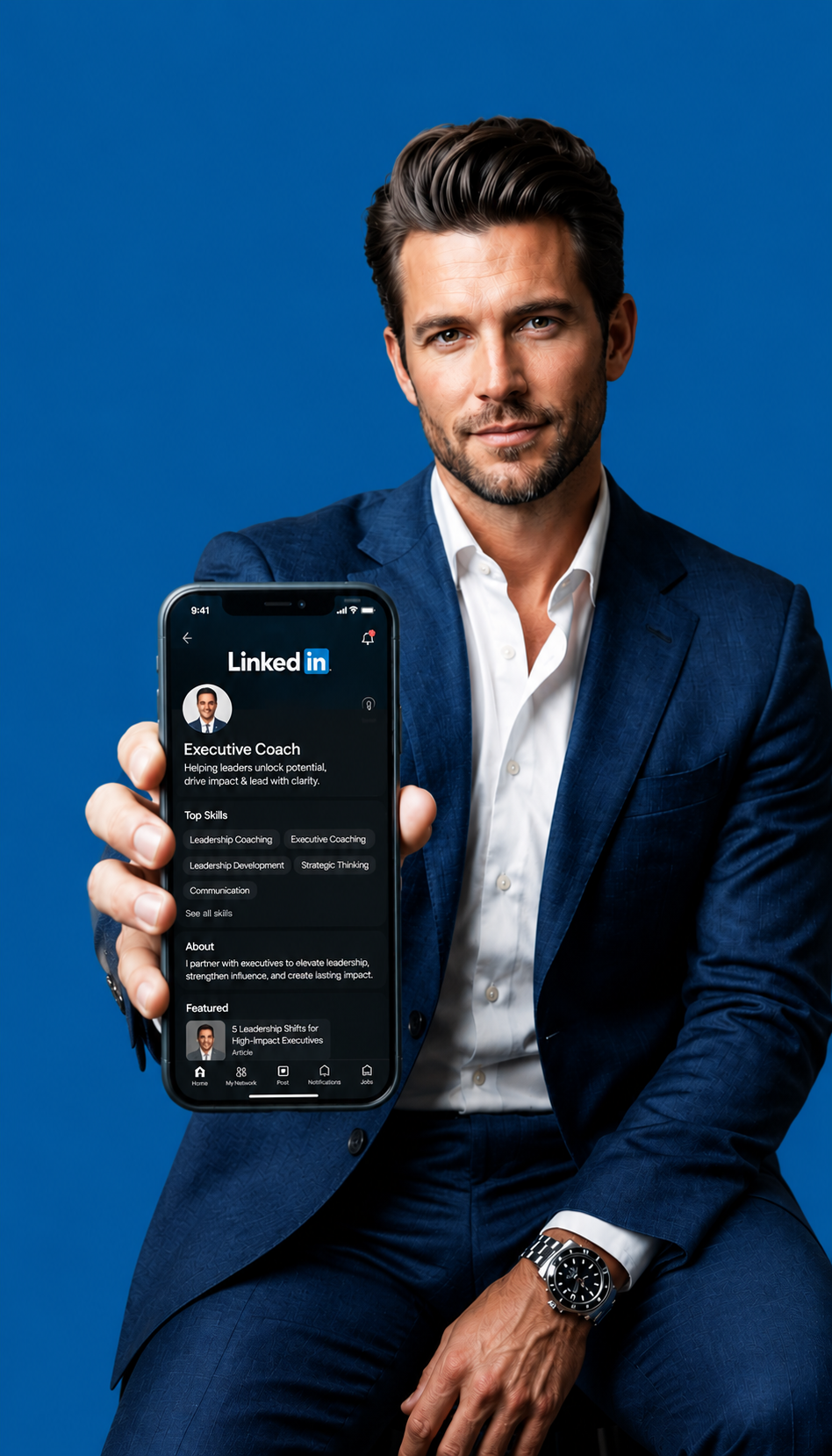

LinkedIn Is Not Your Resume – It’s Your Executive Brand
Every day, executives, founders, HR leaders, and decision-makers search LinkedIn looking for experts they can trust.
They aren’t searching for the coach with the longest list of certifications.
They’re searching for someone who demonstrates credibility, communicates clearly, and consistently shares valuable insights.
This is why LinkedIn Branding for Executive Coaches has become one of the most important investments an executive coach can make.
Unfortunately, many coaches still treat LinkedIn like a digital résumé.
Their profile reads like a career history.
Their headline lists credentials.
Their About section resembles a biography.
Their content is inconsistent – or nonexistent.
While these profiles may look professional, they rarely inspire confidence or generate meaningful conversations with high-value clients.
Today’s buyers don’t hire based solely on experience.
They hire based on perception.
Your LinkedIn profile is often the first impression someone has of your expertise. Before a prospect visits your website, books a discovery call, or reads your case studies, they will likely review your LinkedIn profile to decide whether you’re worth their time.
That means your profile isn’t simply a document of your career.
It’s actively shaping your reputation.
Executive Summary
For executive coaches, LinkedIn has evolved into far more than a networking platform.
It has become the world’s largest professional stage for building trust, demonstrating expertise, and positioning yourself as a thought leader.
This guide explores why executive coaches should stop thinking of LinkedIn as a résumé and start treating it as an executive branding platform.
You’ll learn:
- Why branding matters more than credentials
- The difference between a résumé profile and an authority profile
- How premium executive coaches position themselves
- The Executive Brand Framework for LinkedIn
- Common mistakes that reduce credibility
- Practical strategies for attracting high-value coaching clients
If your goal is to grow your coaching practice through authority instead of constant outreach, LinkedIn should become one of your most valuable business assets.
Why LinkedIn Matters More Than Ever
Executive coaching is fundamentally a business built on trust.
Unlike buying software or products, clients cannot evaluate coaching through specifications or feature lists.
They evaluate the person.
They ask questions such as:
“Does this coach understand leaders like me?”
“Can I trust this person?”
“Do they have the executive presence I’m looking for?”
“Would I feel confident introducing them to my leadership team?”
LinkedIn answers these questions before you ever speak to a prospective client.
Your profile, content, recommendations, and activity collectively communicate your credibility.
When someone lands on your profile, they are not just reading your experience.
They’re evaluating your brand.
The Biggest Mistake Executive Coaches Make
Many executive coaches spend years building impressive careers before launching their coaching businesses.
They bring decades of leadership experience, executive roles, certifications, and client successes.
Yet when they create their LinkedIn profile, they copy their résumé.
The result usually looks something like this:
- Former Executive
- Certified Executive Coach
- Leadership Consultant
- Twenty years of experience
- MBA
- Professional certifications
While all of these achievements matter, they don’t answer the one question every potential client is asking:
“Why should I choose you?”
A résumé explains where you’ve been.
A personal brand explains why your experience matters.
That’s the difference between listing accomplishments and communicating value.
LinkedIn Is Your Executive Brand, Not Your Resume
Think of your LinkedIn profile as your digital executive presence.
Every section should reinforce one central message:
Who you help, how you help them, and why they should trust you.
Instead of documenting your career chronologically, your profile should tell a compelling story.
It should demonstrate:
- Your expertise
- Your perspective
- Your leadership philosophy
- Your communication style
- Your credibility
- Your thought leadership
The best executive coaches don’t simply describe what they do.
They educate.
They challenge assumptions.
They provide valuable insights.
They become known for their ideas.
That’s exactly what creates authority.
The Shift from Experience to Authority
Experience alone no longer creates differentiation.
Thousands of executive coaches have impressive résumés.
Thousands hold respected certifications.
Thousands have leadership experience.
Very few have recognizable brands.
Authority comes from consistently sharing expertise that helps your audience think differently.
This is why coaches with fewer years of experience sometimes outperform more experienced competitors.
They’re visible.
They’re memorable.
They’re trusted.
Authority compounds over time through consistent positioning.
The Executive Brand Framework
Rather than optimizing your LinkedIn profile like a résumé, think of it as a complete branding system.
The Executive Brand Framework consists of five interconnected pillars.
1. Positioning
Clearly define:
- Who you serve
- What transformation do you create
- What makes your approach different
Avoid generic descriptions like “Leadership Coach.”
Instead, articulate a clear value proposition that resonates with senior executives.
2. Credibility
Trust is earned through evidence.
Showcase:
- Client outcomes
- Testimonials
- Executive experience
- Speaking engagements
- Podcasts
- Articles
- Certifications
- Media features
- Industry recognition
Don’t simply claim expertise.
Demonstrate it.
3. Thought Leadership
Your content should consistently answer questions your ideal clients are already asking.
Rather than posting motivational quotes, share:
- Leadership observations
- Executive decision-making frameworks
- Communication strategies
- Organizational challenges
- Coaching insights
- Lessons from real-world experience
Thought leadership isn’t about posting more.
It’s about contributing meaningful ideas that reflect your expertise.
4. Consistency
Strong brands are recognizable.
Your headline, banner image, profile photo, About section, featured content, website, and posts should all communicate a consistent message.
When every touchpoint reinforces the same positioning, trust grows naturally.
Consistency builds familiarity.
Familiarity builds credibility.
Credibility drives opportunities.
5. Visibility
Even the strongest expertise has limited impact if few people see it.
Visibility comes from:
- Publishing consistently
- Engaging thoughtfully
- Building meaningful relationships
- Participating in industry conversations
- Sharing valuable perspectives
Visibility amplifies authority.
Authority attracts opportunities.